

10 Years of Supporting Young Asylum Seekers & Refugees
Since January 2016, the Asylum and Refugee team at 1625 Independent People has supported 95 young men from 13 different countries, including Afghanistan, Syria, Iran, and Sudan. Of these, 71 young people have successfully been granted Leave to Remain in the UK, many after complex and challenging asylum processes.
This year marks 10 years of supporting young asylum seekers and refugees. To reflect on this milestone, we spoke to Jeremy and Amy from the Asylum and Refugee team about the early days of the service, how it has evolved, and what continues to drive their work forward.
The Early Days
In the early days, both Jeremy and Amy recall how little awareness there was of the specific needs of young people seeking asylum. “It felt like we were one of the organisations offering tailored support,” Amy explains. “There were fewer young people in the service, but the need was already clear.”
For Jeremy, those first moments were filled with uncertainty and learning. He remembers being told he would be supporting four young people from Eritrea and Sudan, and realising how much he still had to learn, from unfamiliar terminology to navigating communication across languages and cultures.
“Very quickly after meeting them, I realised this was going to be an experience that I learned from, and that would change me,” he says.
What stands out most now are the moments of humour, perspective and resilience. Jeremy recalls worrying about leaving the young people unsupported over a weekend, only to hear them confidently describe how they’d explored Bristol together. “They said, ‘Mr J, we have crossed the Sahara, getting across Bristol was not going to be a problem.’”
He noted: ‘’ What stands out to me the most was how respectful they were and how eager they were to accept help.’’
These early experiences set the tone for a service grounded in respect, learning and mutual trust.
Growth and Change
Over the past decade, the service has grown significantly, from supporting a small number of young people to working with close to 100 individuals, each with their own story and journey.
Jeremy reflects on how personal the work has remained despite that growth. “I could probably name most of the young people we’ve supported over the 10 years,” he says. “They were all individuals, and it was always a privilege to hear their stories.”
The service has also expanded in practical ways. What began as part-time support evolved into a full-time role, and around four years ago, accommodation-based support was introduced at the request of Bristol City Council. Today, the team supports young people across three properties in Bristol, including one donated by a member of the public specifically to benefit young asylum seekers.
Alongside this, Amy highlights how training and learning have become a core part of the work. “We now deliver more training sessions to foster carers, 1625ip staff, social workers and personal advisers,” she explains, helping to improve understanding and consistency of support across services.
Moments of Pride
For both Jeremy and Amy, pride comes down to relationships and long-term impact.
Jeremy speaks about the trust built with young people. “They’ve often reflected that we’re the only people who really understand what they’re facing,” he says. That trust has tangible outcomes, including the fact that no young person supported by the service has ever absconded. “Even when things are bad, they know we will listen.”
Amy reflects on moments of growth and independence. “Seeing a young person start to make positive choices, take responsibility, and build confidence, that’s huge,” she says. She also points to the importance of advocacy, and moments like watching a young person persist through multiple attempts to pass their driving test, saving up to cover the cost themselves.
“Those moments show resilience and belief in the future.”
Challenges Along the Way
From the beginning, the team has often been learning alongside the young people they support. Jeremy describes the service as “pioneering support”, with staff attending Home Office appointments and reflecting on how to make the experience less intimidating and more humane.
Over time, challenges have increased. Amy notes that young people now face “more uncertainty for longer periods of time,” with more refusals, appeals and reduced access to legal aid. Political changes and public narratives have added further pressure.
Despite this, the team has remained focused on adapting, advocating and staying alongside young people, particularly when the wider system feels overwhelming or hostile.
Why This Work Matters
Marking 10 years feels especially important in today’s climate. Amy emphasises that every young person supported “has a name, a story and a journey, and we have the honour of being a small part of that.”
Jeremy reflects on how much these young people contribute to society. “They bring drive, resilience and skills,” he says, “and I’ve grown as a person through working with them.”
”They want to make the best of their lives in the UK which can only benefit the whole of society.’’
The milestone is also a moment to recognise the organisation’s achievement, sustaining specialist support over a decade, building trust with local authorities, and continuing to centre compassion and dignity in the work.
Looking Ahead
For both interviewees, the answer is clear: the young people themselves.
“Their willingness to accept help, their respect, and their humour,” Jeremy says, recalling moments that still make him smile, including sitting in a dentist’s waiting room when a young person joked, “They’re probably trying to work out how to pronounce my name.”
Amy speaks about the importance of hope. “Working in a team that genuinely cares and holding onto hope for each young person and for a better world, that’s what keeps me going.”
Looking ahead, both hope to continue delivering high-quality support, create more opportunities for young people to thrive, and help others better understand the value and potential of those seeking safety in the UK.
-
 1st June 2026
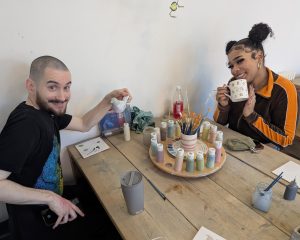
Reflections from our Queer Peer Support Group At 1625 Independent People, our monthly Queer Peer Support sessions create space for LGBTQ+ young people to come together, connect, and simply be themselves. Sometimes that looks like deep conversations about identity and belonging. Sometimes it’s painting nails, chatting about films, laughing about internet trends, or sharing frustrations […]
-
 11th May 2026
At 20 years old, Kay McMichael has already experienced more challenges than many people face in a lifetime. From growing up around addiction and spending time in care, to navigating years of being misunderstood by mental health services, Kay’s journey has been shaped by resilience, survival, and determination to keep going, even during the hardest moments. […]
-
 13th April 2026
What does it really mean to partner with a charity? For the organisations we work with at 1625 Independent People, it goes far beyond fundraising. It’s about shared purpose, real human connection, and creating lasting change for young people facing homelessness. Through our Stronger Together campaign, we spoke to five of our incredible corporate partners to understand what these partnerships look like in practice, and why they […]
-
 16th March 2026
For Neurodiversity Celebration Week, we asked young people connected to 1625 Independent People to share what being neurodivergent means to them. Neurodiversity recognises that people experience and interact with the world in different ways. For many young people, it can shape how they learn, communicate, manage everyday tasks, and understand themselves. Through their reflections, young people […]
 English
  French
  Arabic
  Polish
  Chinese
  Urdu
Urdu  Pashto
  Kurdish