
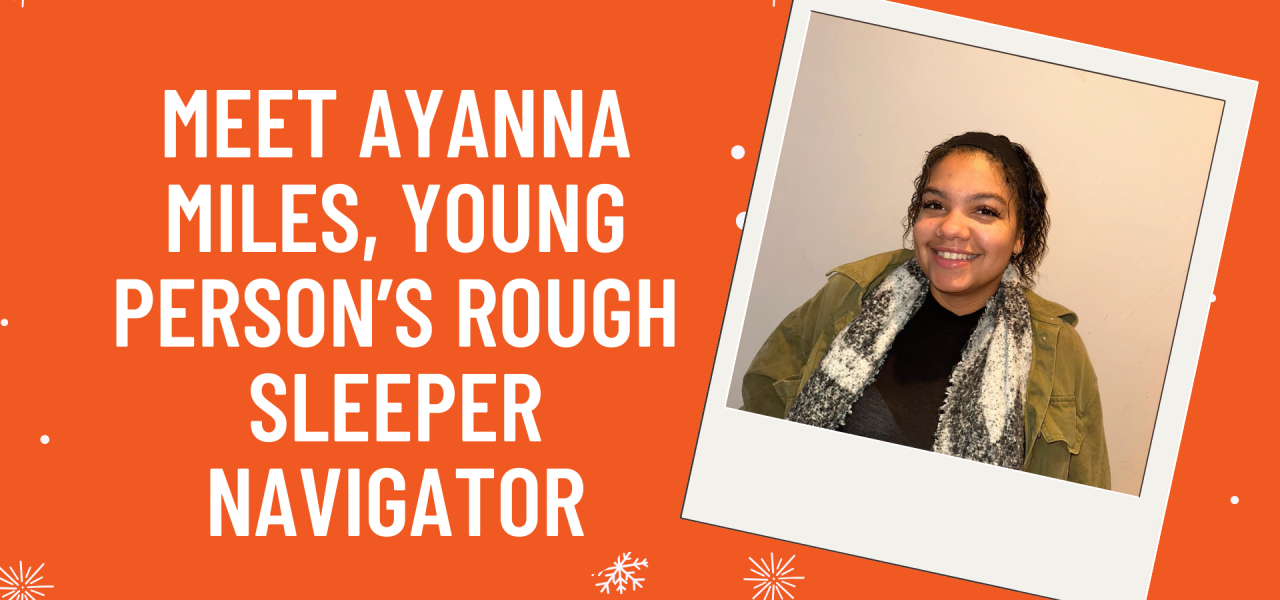
Meet Ayanna
Introducing Ayanna Miles, Young Person’s Rough Sleeper Navigator at Bristol Youth MAPS. In this blog, she sheds light on her role, shares insights into her interactions with young people, and addresses the challenges they may face, including the stigmas associated with rough sleeping.
My name is Ayanna Miles and I am the Young Person’s Rough Sleeper Navigator at Bristol Youth MAPS and have been in my role now for 4 months. MAPS is the front door for youth homelessness in Bristol and we support people ages 16-22 who are experiencing homelessness or are at risk of homelessness. We work with families to keep young people at home where possible and support young people in accessing accommodation using a trauma-informed approach. We are an open-door service and everyone at MAPS goes above and beyond to support each and every young person who walks through the door to navigate an extremely difficult journey. My role specifically works with young people who are or have experienced rough sleeping and are unable to return home.
I wanted to join the MAPS team at 1625 Independent People because no one should have to sleep rough. Many of the people we work with have been through so much trauma that no one especially of that age should have to go through. The brain does not fully develop until the age of 25 and the effects of trauma can slow down a child’s brain development, many of our young people would find it almost impossible to manage their situation on their own.
I love that my job is led by the young people I work with. I love the flexibility of being able to support each and every one of my clients specifically to their needs and I rarely find myself having to say no. It is inspiring to watch young people get up every day and face their situation head-on regardless of the barriers they are constantly met with, something I know I would find so hard if I found myself in that position.
There is so much stigma around homelessness. Many people assume individuals are homeless due to a fault of their own. This is not the case. Most of our homeless cases are a result of breakdown in families and relationships, fleeing from domestic abuse, refugees fleeing war, lack of affordability and so many more reasons out of someone’s control. I have a young person on my caseload who is currently rough sleeping, we had a meeting, and they explained a situation they faced where a member of the public stepped over them and said, “Why don’t you just get a job”. They explained that it didn’t annoy them because they are used to it. They said that they would get a job but they know they are not in a position to do that at the moment and they said that having a job would not resolve their homelessness. They said they would likely lose that job quickly because they don’t have the facilities to be hygienic. They don’t always have the technology to know what the time is – how would they set an alarm to get up for work in the morning? – and they would likely be discriminated against by the workplace. The member of the public was not expecting this response and was stunned for words. I thought this was really inspiring, to have the confidence to own your homelessness and to educate those who wrongfully look down on you. People who are homeless face these barriers every day, and it isn’t recognised.
This time of year, my role is no different. Homelessness doesn’t stop at Christmas; the same issues occur that occur every other 11 months of the year. But as services wind down for the Christmas period, we still have an influx of young people who are homeless or at risk of being homeless walk through our door. The 1625 Christmas campaign is there to raise money so we can continue to go above and beyond for the young people we support. When you are giving and receiving presents on Christmas morning this year, there will be young people out there where Christmas is like any other day of the year. No one should have to experience that.
-
 1st June 2026
Reflections from our Queer Peer Support Group At 1625 Independent People, our monthly Queer Peer Support sessions create space for LGBTQ+ young people to come together, connect, and simply be themselves. Sometimes that looks like deep conversations about identity and belonging. Sometimes it’s painting nails, chatting about films, laughing about internet trends, or sharing frustrations […]
-
 11th May 2026
At 20 years old, Kay McMichael has already experienced more challenges than many people face in a lifetime. From growing up around addiction and spending time in care, to navigating years of being misunderstood by mental health services, Kay’s journey has been shaped by resilience, survival, and determination to keep going, even during the hardest moments. […]
-
 13th April 2026
What does it really mean to partner with a charity? For the organisations we work with at 1625 Independent People, it goes far beyond fundraising. It’s about shared purpose, real human connection, and creating lasting change for young people facing homelessness. Through our Stronger Together campaign, we spoke to five of our incredible corporate partners to understand what these partnerships look like in practice, and why they […]
-
 16th March 2026
For Neurodiversity Celebration Week, we asked young people connected to 1625 Independent People to share what being neurodivergent means to them. Neurodiversity recognises that people experience and interact with the world in different ways. For many young people, it can shape how they learn, communicate, manage everyday tasks, and understand themselves. Through their reflections, young people […]
 English
  French
  Arabic
  Polish
  Chinese
  Urdu
Urdu  Pashto
  Kurdish